
Storm work moves the same job across field, office, and insurance processes
Technicians, adjusters, office staff, customers, assignments, vehicles, and evidence can all affect the next decision.
Dent Experts did not just need another field app. The real problem was that photos, vehicle and claim details, assignments, and office decisions kept getting separated as the job moved. We built the iPhone experience and shared system around the operator’s record—not around the carrier’s version of the claim.

Technicians, adjusters, office staff, customers, assignments, vehicles, and evidence can all affect the next decision.
The team needed one operator-owned record keeping evidence, ownership, and the next decision visible from dispatch through repair.
This is the pattern to look for: one job moves through several people and systems, but no record survives the whole trip.
Here’s the Problem
The technician had the vehicle, photos, severity, and what actually happened on site. The office had claim status, scheduling, and customer communication. The insurance platform had the carrier’s record. Every time those pieces separated, somebody had to reconstruct the job before making the next decision.
Photos lived apart from assignments. Status moved through messages. Office staff had to ask what happened in the field. The same vehicle or claim context was reinterpreted at dispatch, inspection, submission, scheduling, and sign-off.
Carrier-centered software is designed to maintain the carrier’s claim record. Dent Experts needed a working record organized around its crews, evidence, job ownership, and field-to-office decisions while still accommodating the required insurance process.
The field app was only one screen in the problem. The actual product was an operator-owned record that stayed useful from inspection through office action.
What We Changed
We treated the mobile experience, shared record, outside handoffs, and management view as one product because the job had to survive all of them.
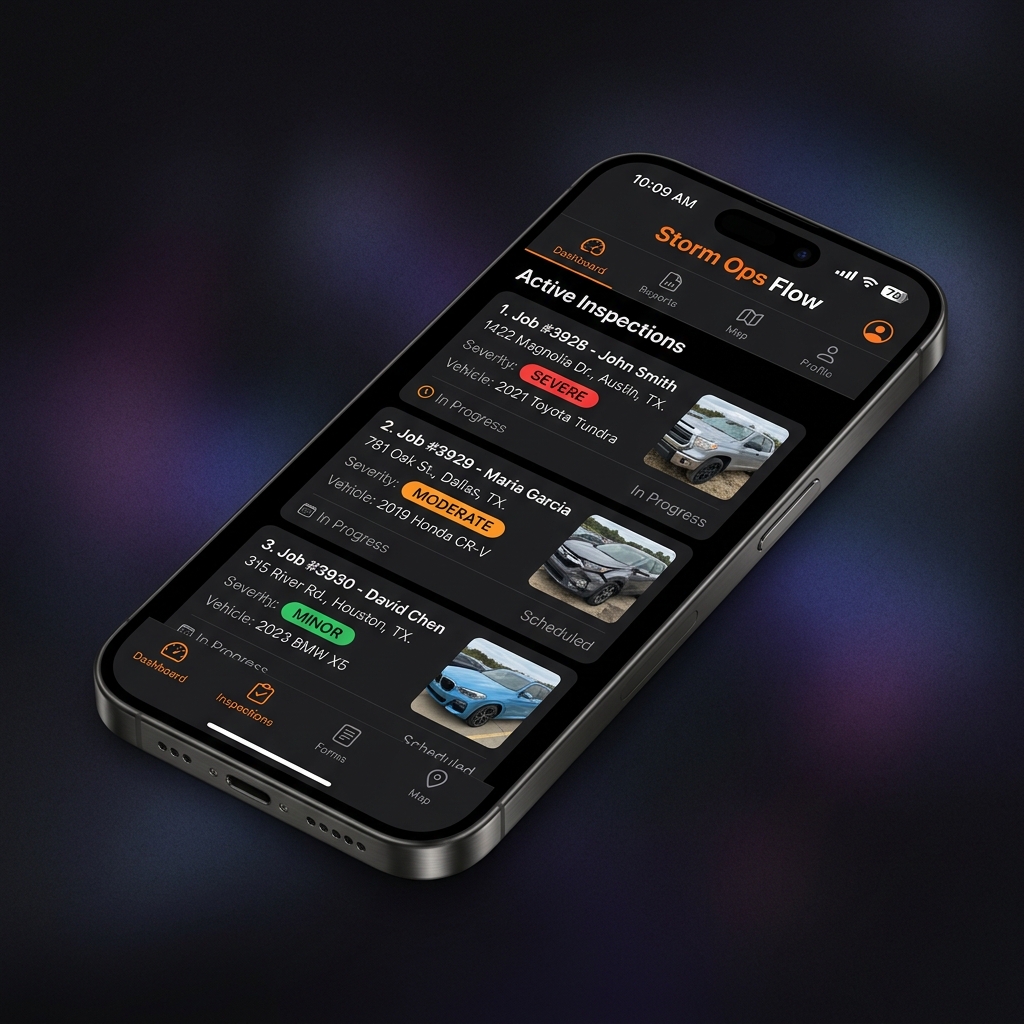
The iPhone experience centered the job queue, vehicle inspection, photo capture, severity, and relevant claim context where the work occurred.
The practical value: the office received job context, not a loose collection of photos and updates.Dispatch, inspection, documentation, claim handoff, scheduling, and repair sign-off referenced the same operator-controlled record.
The practical value: each person could move the same job forward instead of rebuilding it.The product allowed for insurance-platform and claim-data handoffs while keeping the operator’s job, evidence, assignments, and management view central.
The practical value: the team could participate in the required claim process without giving up its own end-to-end view.It may handle the carrier’s record perfectly well. The gap appears when your field evidence, assignments, stages, and management decisions still live somewhere else. The custom system handled that operator layer. It was not trying to replace the entire insurance ecosystem.
How It Worked
Field evidence and office decisions stayed connected while required claim handoffs remained visible.
That shared record changed state as the job moved from dispatch to inspection, documentation, coordination, repair, and sign-off. The office did not need a separate conversation just to discover what was happening.
“He built a complete Apple application and custom system that rivals the major insurance platforms we use daily.”
What Changed
This case is about an operating result, not a made-up efficiency percentage: a custom field experience, one shared job record, and a management view covering the core field-to-office workflow.
Active work, vehicle inspection, photos, and job context became available where the evidence was created.
Field evidence and office context stayed attached to the same operator-controlled job.
Crews, assignments, documentation, claim status, and pipeline stage could be viewed together.
What we are not claiming: there is no quantified time saving, “zero re-entry,” national-scale claim, or named live insurance integration here. The comparison to major platforms is the client’s opinion, not a formal benchmark. The phone image is concept UI, not a production screenshot.
A mobile form can capture data. It cannot, by itself, run an operation. The value came from giving the field, office, management, and outside handoffs one job record to work around.
Does This Sound Familiar?
Bring to the first call: one representative job or claim, the field forms and photos it produces, the people who touch it, and a list of every system it enters before closeout.
Field-Workflow Fit Call
We’ll walk one real job from the field through the office and every outside-system handoff. Then we’ll decide what the smallest useful product would be—or whether the tools you already have should simply be configured better.
Request a Fit CallNo integration, efficiency, or deployment claim is made before the actual systems and workflow evidence are reviewed.